
Dream Green
-
Clean Oceans
Clean World Project
Show Map Features:
- Favorites
- My Organizations
- My Friends
- Events
- My Items Collected
- Report Environmental Violation
- Create Petition
- My Photos
- My Videos
- Places Visited
- Road Map
- 3D Buildings
- Satelite Images
- Photos
- Drone Videos
- Nature Reserves
- Marine Sancturies
- Air Temperature
- Ocean Temperature
- Currents
- Tides
- Sea level rise
- Winds
- Storms/Weather
- Snow, Glaciers
- Earthquakes
- Volcano Eruptions
- Plastic
- Metal
- Glass
- Fishing Nets & Gear
- Batteries
- Electronics
- Oil
- Tires
- Paint
- Chemicals
- Single Use Plastic Bags
- Single Use Plastic Bottles
- Single Use Cup Ban
- Ban Helium Balloons
- Plastic Bottle Deposit/Refund
- Glas Bottle Deposit/Refund
- Plastic Bag Fee
- Cigarette Butts
- Land Use
- Animal Protection
- Ocean Conservation
- Other
- Single Use Plastic Bag Ban
- Single Use Plastic Bottle Ban
- Single Use Cup Ban
- Helium Party Balloon Ban
- Plastic Bottle Deposit/Refund
- Plastic Bag Fee
- Mandatory Plastic Recycling
- Mandatory Electronics Recycling
Dream Green
We can make a difference. Our aim was to provide a software mapping solution that brings environmental groups, the public, communities, schools and corporations together to share information, reduce IT costs and reduce the plastic pollution everywhere. Unfortunately this project could not get off the ground due to financing requirements for IT staff.
Objectives:
Phase 1:Develop a comprehensive global map (see first draft) using Open Street Maps to present environmental information. To process data from governments and organizations around the world into a coherent simple to interpret format. Eventually use machine learning tools to predict ocean and coastal debris levels and what locations should be targeted for cleanup and when. What influence legislation can have, what works best. Make the map available to all conservation groups to embed in their web sites, allowing them to still customize the top layer for their viewers but provide check box choices to view everyone's data and numerous other layers that include the data options below and others.
And finally create an experience that inspires and provides pathways to encourage people to want to get involved in a global effort to tackle one of the greatest challenges.Some of the content will include:
- Data to plot and quantify the plastic waste, including from photos from the public, video and images of coastlines from drones, small aircraft and possibly even satellite data.
- Plot and list the world's environmental organizations and areas of activity, from major to grass roots. Our web globe would indicate what each organization is doing and where, list event dates and quantify what is collected under our "Who, Where, What and When" system. It will provide a means to share data and help optimize resources of volunteers and national and international organizations.
- A means for volunteers to organize land, coastal and water way cleanups. For people to register and offer their assistance for any time period they specify. When enough volunteers accrue in a specific area for an automated notification be sent to connect them for a cleanup event.
- For both established and informal groups to organize in specific areas by registering online and creating events so even non members of those groups might be inspired to join an event. This could even involve groups of pleasure boats, sailing vessels and fishing boats in local waters that could target specific islands or beach areas that are impossible to access via other means.
- It will list government and local bodies who can remove the plastic collected. Hopefully this will spur new companies to form to purchase and process it.
- It will list solutions and uses for plastic waste.
- We will also include local and national water current depictions and weather charts. This could help locate the plastic origins, and help identify areas that might become disaster areas following major national disasters such as Typhoons and hurricanes.
- One will be able to select options such as view cities that have banned helium balloons, or require a deposit on all plastic bottles, at minimum a fee for one use plastic bags, recycling programs or other efforts that make a real difference.
- We will support the creation of petitions, lobbying, using the media and other efforts to implement changes and laws that are needed to reduce plastic waste in the environment. Including promoting plastic bottle deposits that are already established in numerous places. see: https://en.wikipedia.org/wiki/Container_deposit_legislation
- We will support the formation of school student groups that accept the challenge of getting over 10 million students around the world to go out and collect at least 10 lbs of plastic litter every month or as practical.
- There will be annual awards and international recognition. We will champion new initiatives that make profound improvements.
- The globe will indicate what organizations have accomplished and share their successes and failures to find the best methods for different situations. For example, cities have successfully banned one use plastic bags or required a small fee for them. India is building roads with plastic waste. Alaska has tremendous coastal plastic waste problem and a shortage of diesel and heating fuel in the winter in small villages. An ideal solution would be plastic to fuel converters / electrical generators. In Hawaii plastic debris washed up on the shores is burned by the local electrical utility to generate power. Building materials, carpets, children's playgrounds and countless other things are already available manufactured from plastic waste. We can do so much more.
This is how NOAA presents marine debris data: http://clearinghouse.marinedebris.noaa.gov/visualize/
This is how data should be presented. http://earth.nullschool.net/
We have made a substantial effort to further this project including discussions with Alaskan authorities, EPA, NOAA, US senators and others and a number of groups already involved in such research or activities. We were even offered the m/v Susitna to kick off the project in Alaska.
We have had discussions with researchers at a leading university and with private groups regarding the development of plastic to fuel processors with byproducts of fresh drinking water and electricity.
We need a realistic global approach to begin to tackle the horrifying volume of waste entering the oceans. No one solution will suffice. We can do this together, there is no alternative and time is short.
We welcome any one who shares the passion.Sincerely
Don Green
Dream Green / Clean Oceans
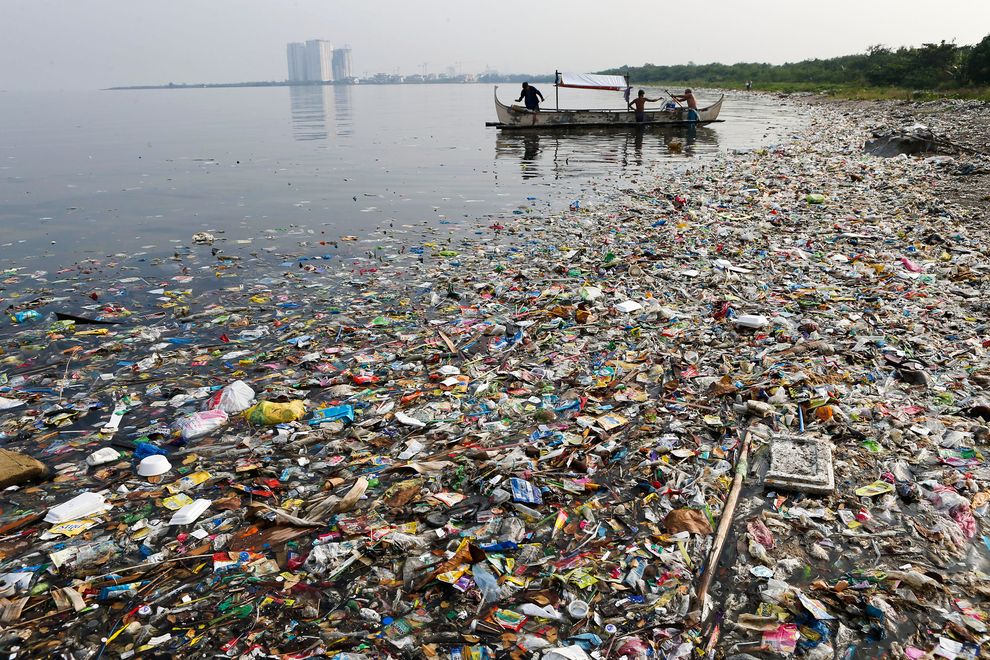
Fishermen set out amid floating garbage off the shore of Manila Bay in the Philippines on June 8, 2013.
Photograph by Erik De Castro, Reuters For more images see here. We just launched a Facebook page to get some feed back from people like you.
Plastic: Approximately 300 million tons are produced per year using between 6 and 8% of all oil extracted. This is only going to grow. The vast majority cannot and will not be recycled. It is filling up landfills and destroying the environment at an alarming rate. The toxins from it can now be identified in every living creature. These are leading to cancers, birth defects and the global death of fish, birds and wildlife. Extensive research has clearly documented these issues. The time for study is over, we must act now. Plastic is not going away so we must find a solution to remove the waste, not to a landfill where it will last for centuries leaching toxins into ground water, but to recycle what we can and convert the rest to a useful form.
Every year natural disasters such as tsunamis, hurricanes (typhoons) or flooding affect populous areas adding million of tons of debris to rivers and eventually the ocean. Other common debris included rope, fishing equipment, glass bottles, paper, and cloth items. It is now common to find 1 ton of plastic per mile on coastlines. - Source: wikipedia
This, on top of the ineffectual garbage collection in many countries and intentional illegal dumping around the world, is effectively destroying the ecosystems that support all life.
Europe relies on conventional incinerators to reduce waste and then ships the ash to landfills reducing the volume by 90%. It does generate energy but much value is lost and dangerous chemical compounds remain in the ash to leach into groundwater. At least 75% of all landfills tested show leaching into the ground water and all are expected to eventually. The Klemetsrud plant in Norway is now importing trash for incineration and at full capacity the plant will provide all the heat and electricity for Oslo's schools and heat for 56,000 homes. Over 300 thousand tons are incinerated annually and that does not count the materials that are extracted for recycling. "Four tonnes of waste has the same energy content as one tonne of fuel oil," says the director of the waste-to-energy agency in Oslo, Pal Mikkelsen.
Here is a report by the World Bank on typical global waste generation, however it does not account for the large quantities of industrial waste and pollution by fraudulent waste disposal companies and other illegal dumping.
The Ocean Cleanup Project started by Boyan Slat is a commendable attempt to remove plastic from the oceans. His project is receiving a lot of media attention, however his information lacks any details about what to do with the plastic. We believe that our organization and its technology focus would compliment his effort. Every effort is needed as the waste in the oceans is continuing to grow.
Because of deep sea conditions (very cold water, little oxygen, few bacteria), all of this trash will likely stick around much longer than it would do on the ground.
The Ocean Conservancy,the international leader in coastal cleanups, has collected several hundred million pounds in three decades of work and relies on volunteers to clean beaches around the world. However the scale of the problem is so big that even their effort is hardly effective.
The Two Hands Project is a collaborative approach to cleaning up the world, similar to the Ocean Conservancy is also doing great work. Everyone can do their bit, big or small.
E-Waste:
Electronic waste is piling up around the world rapidly even after the Basel Convention regulating its export. Much of it is shipped to Africa, India and China (Guiyu in particular) where it is causing massive environmental contamination. The R2:2013 Standard for Electronics Recyclers suffers greatly from its seeming intentional avoidance of international law as it refuses to acknowledge or recognize the definitions and obligations, decisions and guidelines of the Basel Convention, which all developed countries, except the United States, have ratified and implemented and is now globally adopted by 180 countries. Read more: http://ban.org/Library/FiveFundamentalFlawFinal.pdf
Read more statistics here: http://www.cleanair.org/Waste/wasteFacts.html
Additional video information:
http://news.nationalgeographic.com/news/2014/06/140613-ocean-trash-garbage-patch-plastic-science-kerry-marine-debris/?rptregcta=reg_free_np&rptregcampaign=20131016_rw_membership_r2p_intl_sm_w
Ocean plastic: https://www.youtube.com/watch?v=Kd_QlauNmcw
http://www.energydigital.com/green_technology/plasma-gasification-turns-waste-to-energy
Some of the many e-waste videos on YouTube.com:
https://www.youtube.com/watch?v=9j2KPxanzeA
China: https://www.youtube.com/watch?v=yDSWGV3jGek
Ghana: https://www.youtube.com/watch?v=kTWwsDAl4jE
https://www.youtube.com/watch?v=vgUWV2jPEyA
India: https://www.youtube.com/watch?v=i3fOLL10yxY
We are now selling off all the inventory of toys, games and jewelry to raise the money for this project. Think of your purchase as a donation to the cause for a better world. If you are a sailor take a look at the sailboat parts that we make.
We are presently recruiting professionals to move this forward and are already in early talks with Westinghouse and other corporations. We also have several engineers and a number of professional candidates considering joining the team. If you think you can make a difference please contact us.
Please don't forget to sign our petition to WalMart to phase out plastic bags.
Thank you.
Capt. Don Green
Founder of Dream GreenV 9/16/2015 - Information is updated frequently so come back often.
Dream Green
You can now make Paypal donations directly to Dream Green usingThis email address is being protected from spambots. You need JavaScript enabled to view it. or use the button to the left.
-
Flocks

 Awarded a Seal of Excellence
by Creative Child Magazine - 2005
The wild and wacky game of memory and luck. Be the ornithologist to collect the most FLOCKS from the twenty one different types of bird cards, but beware! This daft and daffy game also has the Spying Spectacle Bird that allows you to look at the other players’ cards and the Crazy Cuckoo Bird that lets you grab someone else’s Flocks. And don’t forget to use the lucky Golden Egg Card.
It’s cuckoo - It’s freaky
It’s loco - It’s sneaky
It’s high flying family fun
IT’S FLOCKS!Cards and instructions in English and Spanish.
Ages: 4+
2 + players
10 + minutes play time
Flocks is a terrific memory tool, language aid and giggle inducer. Play is similar to a combination of "GO FISH" and "RUMMY" but with some original and fun twists.

-
Flocks Instructions
 FLOCKS
Feathered Fun for Everyone! Now 4 different games1/ Speed Flocks: An easy game for beginners but very fast
Each player receives 9 cards which they look at. The rest are divided into 2 pickup piles face down on the playing surface. Starting at the same time but without taking turns, players try making Flocks of 3 identical cards by picking up a card from either pickup pile and then discarding any Flocks face down next to them in separate piles so they can be counted at the end of the game. If they cannot make a Flock they must discard a card face up anywhere on the playing surface so they have only 9 cards in hand. The discarded cards may also be picked up to complete a Flock. The object of the game is to have the most Flocks when all cards have been played.At any stage of the game any player can say “Cards” and play stops as players check each others hands to make sure they don’t have more than 10 cards, the 9 normal cards and possibly an extra one they might have just picked up. Any player with more than 10 cards must forfeit a Flock and place it randomly into a pickup pile.
2/ Cross Eyed Flocks: An easy game of memory and observation
One player deals the cards face up all over the playing surface. As soon as a Flock of 3 identical cards is seen, the first player to name the bird wins them. Calling incorrectly a player loses a Flock which is shuffled into the cards that the dealer holds. Golden egg cards can be used as wild cards. The object of the game is to have the most Flocks when all cards have been played. When players are familiar with the game they could be required to name the birds using a foreign language, so for example English players could be asked to name the birds in Spanish.3/ Flocks: The original instructions but now rewirtten for clarity
Object: To make FLOCKS of 3 identical birds and be the Ornithologist (an expert in the study of birds) with the most Flocks at the end of the game.Contents: 72 cards in the FLOCKS deck, 3 of each of 21 different birds plus the following 3 special cards that cannot be asked for in a game.
3 Golden Egg Cards
These can be used as Wild Cards to complete a flock or as a Flock.
3 Spectacle Bird Cards
Each of these cards can only be used once by the ornithologist to look at the cards of the ornithologist to their right. As a turn they are placed in a separate pile known as the Old Cage Home where they retire from the game, and a replacement card is picked up.
3 Crazy Cuckoo Cards
Playing one of these cards to the Old Cage Home and picking up a replacement also constitutes a turn and allows the ornithologist to switch seats with any other ornithologist, keeping their hands but swapping flocks.Play:
Ornithologists are dealt nine cards. The rest of the cards are scattered face down on the playing table and are called the Coop. Two of these cards are turned face up to make two separate Aviary Piles (discard piles). Play begins clockwise with the youngest ornithologist, who must pick up one card from either the Coop or the top of one Aviary and, if they want to, lay down any Flocks face up .
OR
They may ask any other ornithologist for a specific bird card and all the requested cards must be given. Flocks can be laid down.A turn is complete when all players have only 9 cards in hand. First the active player will pick up replacement cards from the Coop or the top of either Avery if required or discard any extra cards onto 1 or both Avery piles. Only then do the other players do the same.
More than one Flock can be placed on the table per turn.- If a Golden Egg card completes a Flock on the table and you have the missing bird, you may replace it, capturing the Golden Egg as a turn and you can immediately lay down any Flock/s in hand. Replace the cards played.
- Play stops immediately there are no replacement cards in the Coop and each ornithologist’s Flocks are counted. If an ornithologist holds 3 Golden Eggs cards in their hands they are awarded three bonus flocks. A Crazy Cuckoo Card in hand receives a deduction of two flocks and a Spectacle Bird Card a deduction of one flock.HINT: To make a quicker game or for very young players remove some of the Flocks.
4/ Bird Brain Flocks: A difficult memory game.
The object of the game is to collect the most Flocks and players take turns. Remove at least 5 sets of Flocks of 3 identical cards to make it easier to start.Shuffle the cards and spread them face down on the playing surface to form the coop.
Each player in turn turns over 4 cards trying to find 3 identical cards to make a flock.
After each turn the cards are turned face down again. If a player finds a Flock they place them face down in front of them, but keep each Flock separate to make counting easier at the end of the game.If a player finds a Spectacle Bird, a Golden egg or a Crazy Cuckoo card they pick these up as they have special uses.
A crazy cuckoo card can be played at any time after another player completes a turn by calling ”Flocks”. This allows them to take a turn even though it was not their turn next or to take another turn if they just played. The crazy cuckoo is not used in play again, having retired to the old cage home.
The Golden Egg card can be used to complete a Flock. If any player at another time in the game finds the missing bird card to complete the Flock in which a Golden Egg card was used, they must guess which player and which stack of cards had used the Golden Egg to take possession of the Golden Egg and replace it with the missing bird.
Owning all 3 Golden Egg cards at the end of the game counts as 4 Flocks, however they cannot be counted if they are being used to complete Flocks of birds.The Spectacle Bird allows the player to look at all players Flocks before taking their turn. Doing this enables them to determine who has the Golden Egg cards thus enabling them to be captured.
If you have any problems with this product, please contact: Dream Green, PO Box 2347 Weirton, WV 26062 or email
This email address is being protected from spambots. You need JavaScript enabled to view it. . Thank you. www.123oy.com, Instructions Revised Feb ‘06Copyright 2005, 2006
-
Neuro Bender Maze Puzzle

This is a colorful puzzle that won't end up in the cupboard. With 2 challenging games in one, it tests only your patience, not your IQ. Great for memory training or just plain fun, the Neuro Bender, with its clock base, is a terrific desk top gift or conversation piece for your coffee table. The Neuro Bender comes in five different jewel like colors; red, green, purple,clear and yellow. Sorry blue is sold out.
