
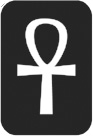
 EGYPTIAN ART
The Ankh is a symbolic representation of both Physical and Eternal life. It is known as the original cross, which is a powerful symbol that was first created by Africans in Ancient Egypt.
The Ankh is commonly known to mean life in the language of Ancient Kemet (land of the Blacks) renamed Egypt by the Greeks. It is also a symbol for the power to give and sustain life, the Ankh is typically associated with material things such as water (which was believed by Egyptians to regenerate life), air, sun, as well as with the Gods, who are frequently pictured carrying an Ankh. The Egyptian king is often associated with the Ankh also, either in possession of an Ankh (providing life to his people) or being given an Ankh (or stream of Ankhs) by the Gods. This can be seen in the picture of King Senworsert below who is holding two Ankhs to his chest. There are numerous examples that have been found that were made from metal, clay and wood. It is usually worn as an amulet to extent the life of living and placed on the mummy to energize the resurrected spirit. The Gods and the Kings are often shown carrying the Ankh to distinguish them from mere mortals. The Ankh symbolized eternal life and bestowed immortality on anyone who possessed it. It is believed that life energy emanating from the Ankh can be absorbed by anyone within a certain proximity. An Ankh serves as an antenna or conduit for the divine power of life that permeates the universe. The amulet is a powerful talisman that provides the wearer with protection from the evil forces of decay and degeneration.
The loop of the Ankh is held by the Gods. It is associated with Isis and Osiris in the Early Dynastic Period. The Loop of the Anhk also represent the feminine discipline or the (Womb), while the elongated section represent the masculine discipline or the (Penis). These two sacred units then come together and form life.
The ancient gods of Egypt are often depicted as carrying ankh signs. We find Anqet, Ptah, Satet, Sobek, Tefnut, Osiris, Ra, Isis, Hathor, Anibus and many other gods often holding the ankh sign, along with a scepter, and in various tomb and temple reliefs, placing it in front of the king's face to symbolize the breath of eternal life. During the Amarna period, the ankh sign was depicted being offered to Akhenaten and Nefertiti by the hands at the end of the rays descending from the sun disk, Aten (See carving). Therefore, the ankh sign is not only a symbol of worldly life, but of life in the netherworld. Therefore, we also find the dead being referred to as ankhu, and a term for a sarcophagus was neb-ankh, meaning possessor of life.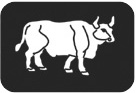 In ancient Egypt, cattle were deified and regarded as the earthly representative of the gods. Egyptian Pharaohs were said to represent two gods. Horus represented Upper Egypt and Seth represented Lower Egypt. Horus was the son of Hathor who was depicted as either a cow or a strong bull. Another Egyptian god that is represented by a bull is the god of rain, a very important entity to the people of Nabta, considering that life or death could have been determined by the amount of rain they received.
Among the Nuer of the Sudan, the most perfect sacrifice is the most treasured possession a person can acquire—a cow or ox. Cattle not only have an important economic and utilitarian significance in Nuer society but they are also of great emotional, psychological, symbolic, and aesthetic value, hence the equation of all sacrificial objects with cattle. This is so much the case that, whatever is offered, be it a sheep, a goat, or a vegetable, it is symbolically regarded as a cow. Just as the concept of the ancestors permeates Malagasy life, so that of cattle is all-pervasive in Nuer life. There is cattle poetry, and there are cattle praise songs, and cattle honorific names, while the initiation gift and symbol of youth is an ox.
In African traditional religion the aim of ritual is to explain and control the workings of the material world. However, there is constant communication between the spiritual and material worlds, so as to restore the harmony between them that through human error was lost at the beginning, and the lack of which explains the precarious and incomplete state of the present material world.
The Maasai of Tanzania and Kenya have an expression “God gave us cattle and grass. Without grass there are no cattle, and without cattle there are no Maasai”. All over Africa cattle are given in payment of dowry and settlement of conflicts and ones wealth is measured by the number of cattle you own. The ancient African strategy game played with cow figures of MORABARABA is very popular. The game was originally taught to young warriors to teach them on how to make cattle raids.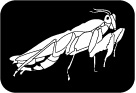 Praying Mantis
The praying mantis has historically been a popular subject of mythology and folklore. In France, people believed a praying mantis would point a lost child home. In Arabic and Turkish cultures, a mantis was thought to point toward Mecca. In Africa, the mantis was thought to brink good luck to whomever it landed on and even restore life to the dead. The Bushmen of Southern Africa as a whole, are traditional tribal religionists and very closed to Christianity. They believe celestial bodies (sun, moon, morning star, and the southern cross) are symbols of divinity and the praying mantis is a divine messenger and when one is seen, diviners try to determine the current message. In the U.S. they were thought to blind men and kill horses. Europeans believed they were highly worshipful to god since they always seemed to be praying. In China, nothing cured bedwetting better than roasted mantis eggs.
See the complete story.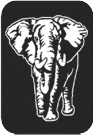 Elephants symbolize wisdom, strength, moderation and eternity.
Elephants have always been used in African mythology as a symbol of strength, leadership and greatness. Even today the Venda people often greet important people as "nda ndou" which literally can be translated as "good day, elephant".
 The rising sun
An emblem of brightness, splendour and the supreme principle of the nature of energy, it symbolises the promise of rebirth, the active faculties of reflection, knowledge, good judgement and willpower. It is the symbol of the source of life, of light and the ultimate wholeness of Humanity.
 The Bantu people and many others are united around the sacredness of water, and I know of no Bantu culture where water does not play a central role.( This original water symbol around the base of the carving and also the Uthini? Board symbolizes how water unites us all like a rope tying us together - Don ) " Bantu" is not an ethnicity but a language group. Originating in the Nok region of Nigeria probably 2,500 years ago, the Bantu were never what is dismissively called a "primitive" culture. Likely by way of Nubia and the Sahel Corridor, presumably ultimately from Egypt, they spread the working of iron and the beauty and complexity of their worldview over rather a large section of Central, South and East Africa from Cameroon to Kenya, from the Cape of Good Hope to Uganda. There are many Bantu languages and many Bantu cultures, and at the same time, they make a fairly coherent whole. - complete text by Michael Ortiz Hill
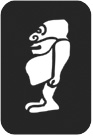 The tokiloshe was originally a water sprite and is commonly described as a brown, hairy dwarf that is invisible to adults. The creature is mischievious, but only malevolent when controlled by an evil sorcerer. (we might call him the boogy man). There is a widely held myth in Southern Africa that says the Africans raise their beds on bricks to avoid being attacked by the Tokiloshe.
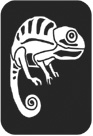 Chameleon - source Myths & Legends of Southern Africa by Penny Miller
The Koi people and several other African groups share a common story that makes them despise the chameleon. The chameleon was given the message by the gods to carry to all man; "As I die, and dying live, so you shall also die, and dying live". He was so slow that the message was then also given to a hare. The hare traveled fast and spread the message to the chiefs who had to accept it. Unfortunately being hare brained he scrambled it; " As I die and dying perish, in the same manner shall you die and perish and come wholly to an end" and so from that day mankind has lived and died.
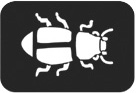 The Toktokkie beetle – One of the hardiest beetles in Southern Africa. It is known as the Doctor of the {mosimage} road. He is a fertility symbol and always features in the wedding songs of the Xhosa people.
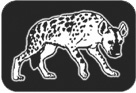 Hyenas - Myths about hyenas originated from confusion about their sexual activity. Male and female mate just as other mammals do, but male and female genitalia are quite similar in appearance. One theory holds that the female has a large amount of male hormones to increase her aggressiveness. Whatever the biological reason, the confusion inspired claims that hyenas could change sex at will. This notion led to accusations of witchcraft and the belief that witches can turn themselves into hyenas.
 The Nsibidi Unity Symbol in the writing of the Ejagham people of Nigeria
Comments
thanks for sharing this.